History & Updates
Long time contributor to these pages Yves Buysse recently sent us links to the photos below (thanks Yves).
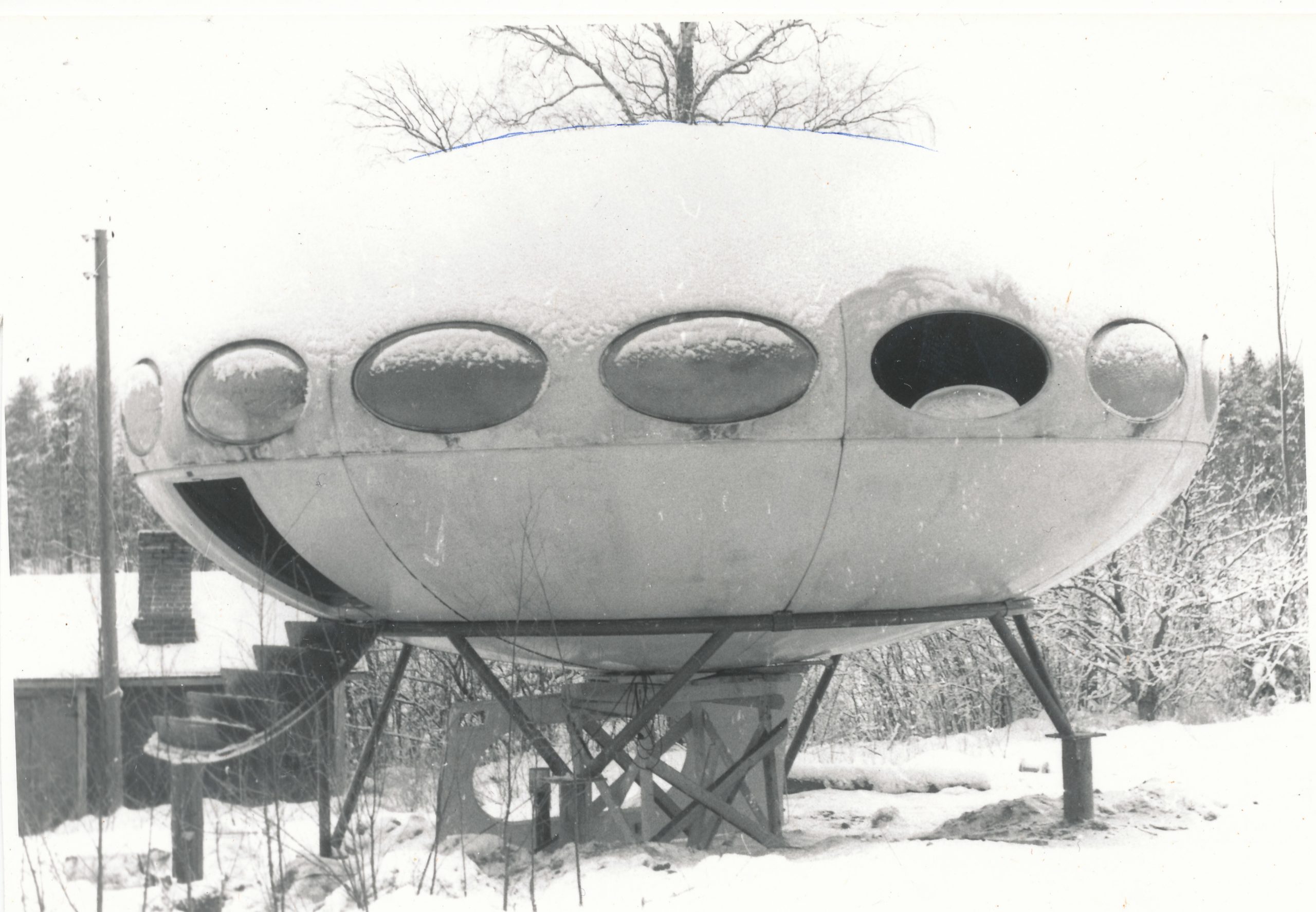
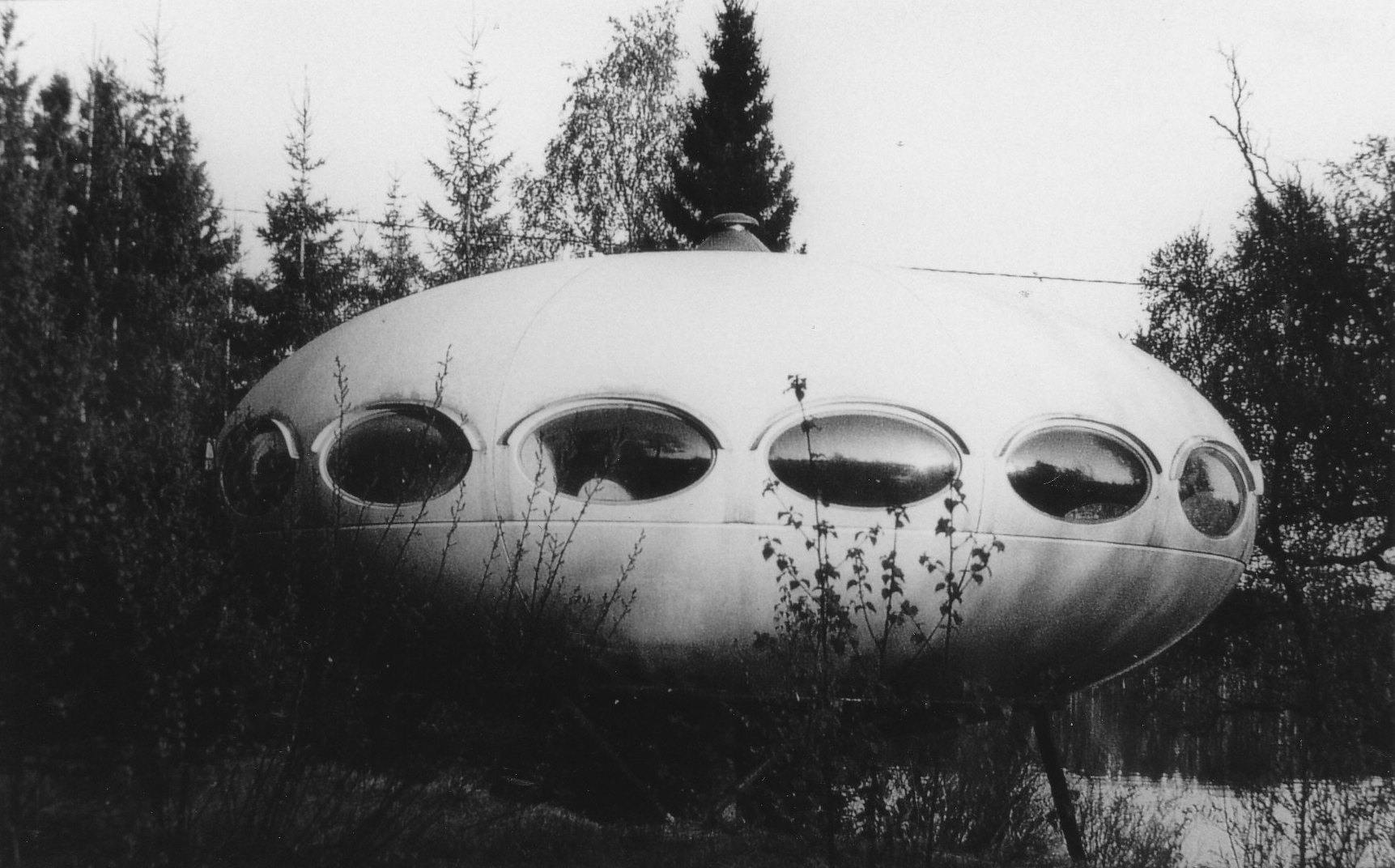
The photos are a part of the collection of the Keitele Municipal Library (and freely available for use with appropriate credit) and show this Futuro in 1977 when it was located on Matti Suuronen’s property.
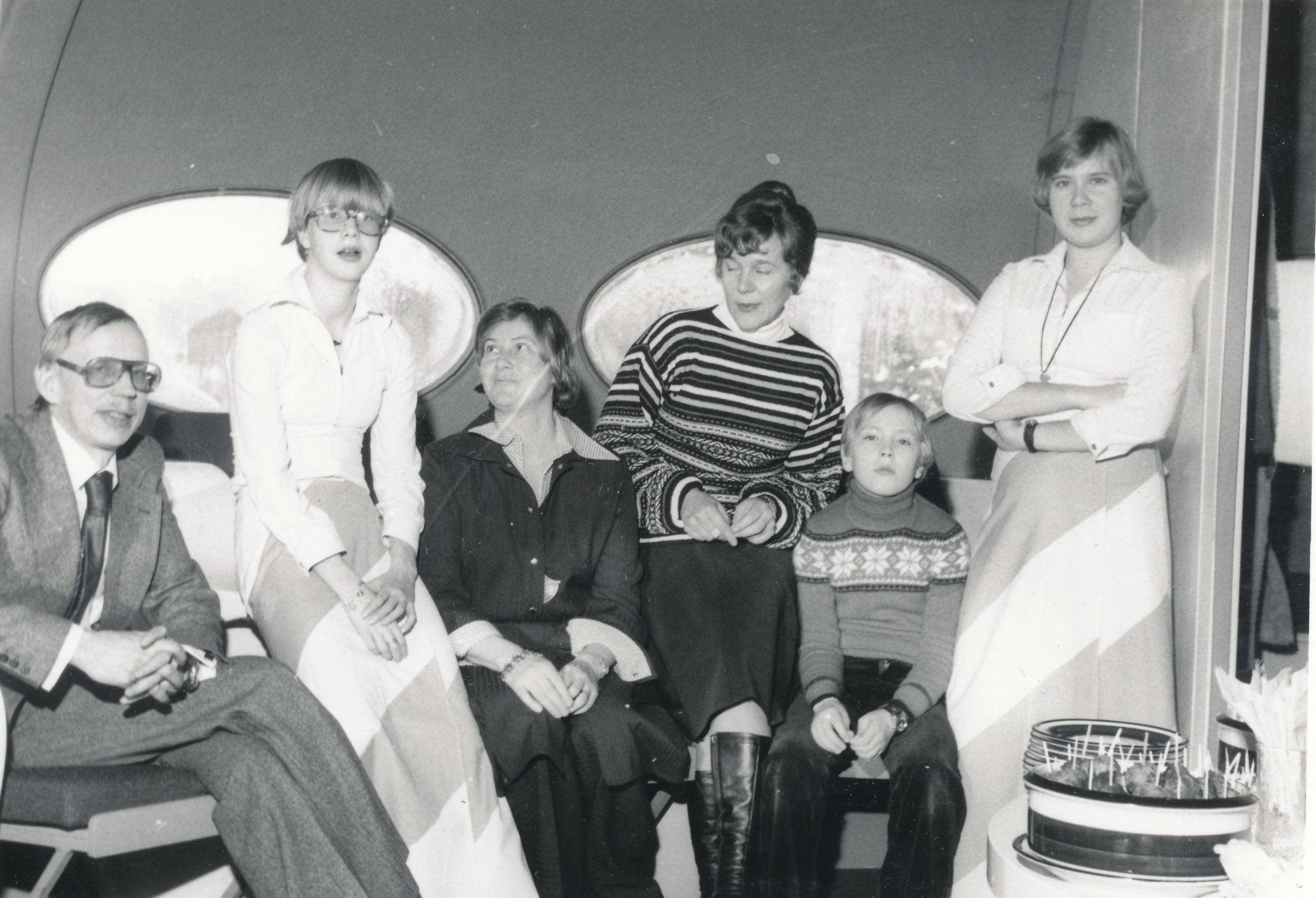
The third photo shows Matti Suuronen and members of his family; The photo’s description includes this:
«… Architect Matti Suuronen (left), the designer and owner of the Futuro house
Futuro #000 was displayed 092100-011401 at «Vision & Reality — Conceptions Of The 20th Century», an exhibition at the Louisiana Museum Of Modern Art in Humlebæk, Denmark (Catalog). These photos taken at the exhibition were recently posted to Instagram by itoh_shun.
The photograph below was posted to Instagram by @futurohouseweegee on 080318 and described as being a «privately owned Futuro House» photographed in Konnevesi, Finland in 1977. We had not heard of a Futuro located in Konnevesi before and the location looked unfamiliar to us so we added Konnevesi to the «Lost Souls» page.
Shortly after that Marko Home, Futuro historian and co-editor of the book Futuro: Tomorrow’s House from Yesterday, contacted us and let us know the photo was in fact a photo of
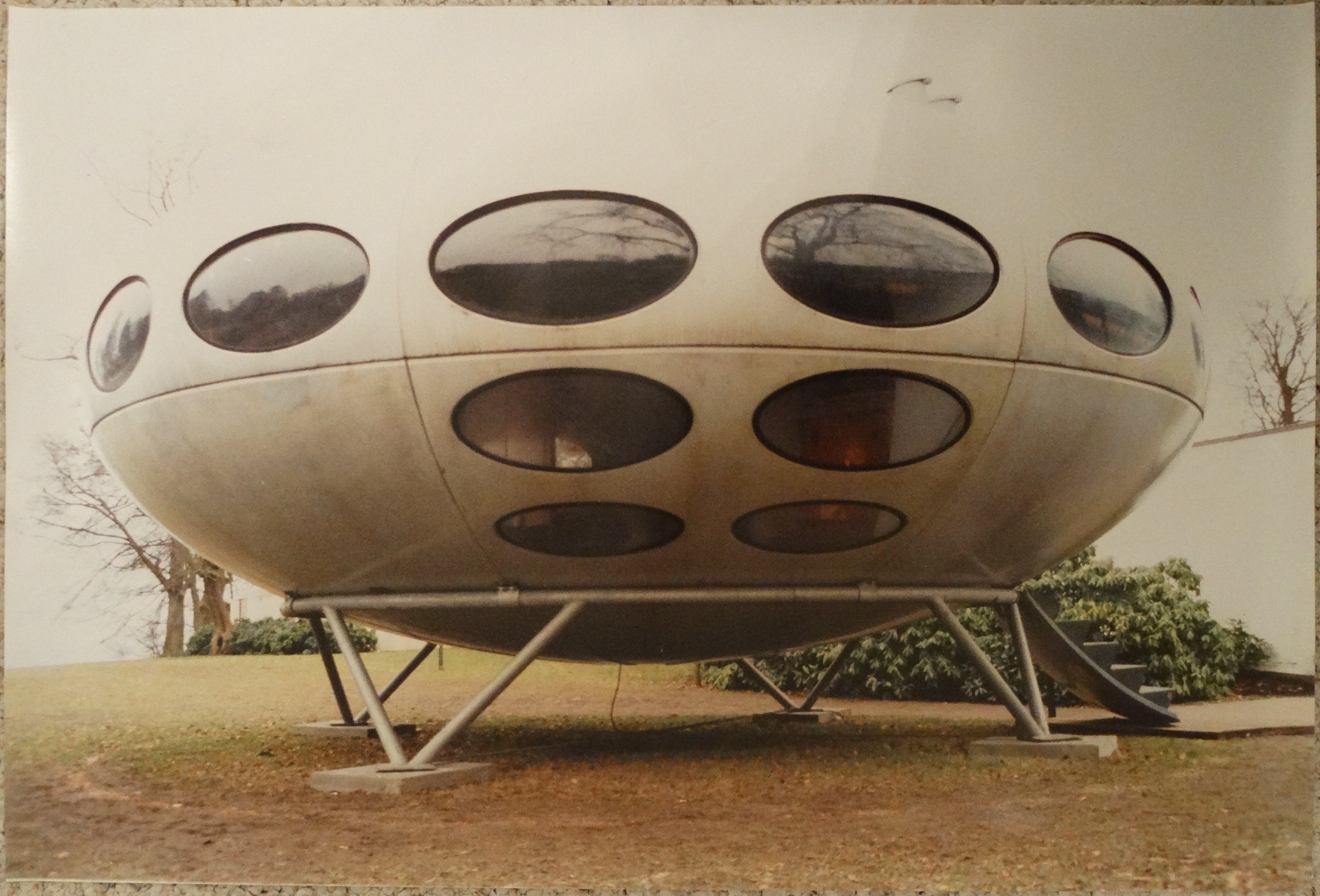
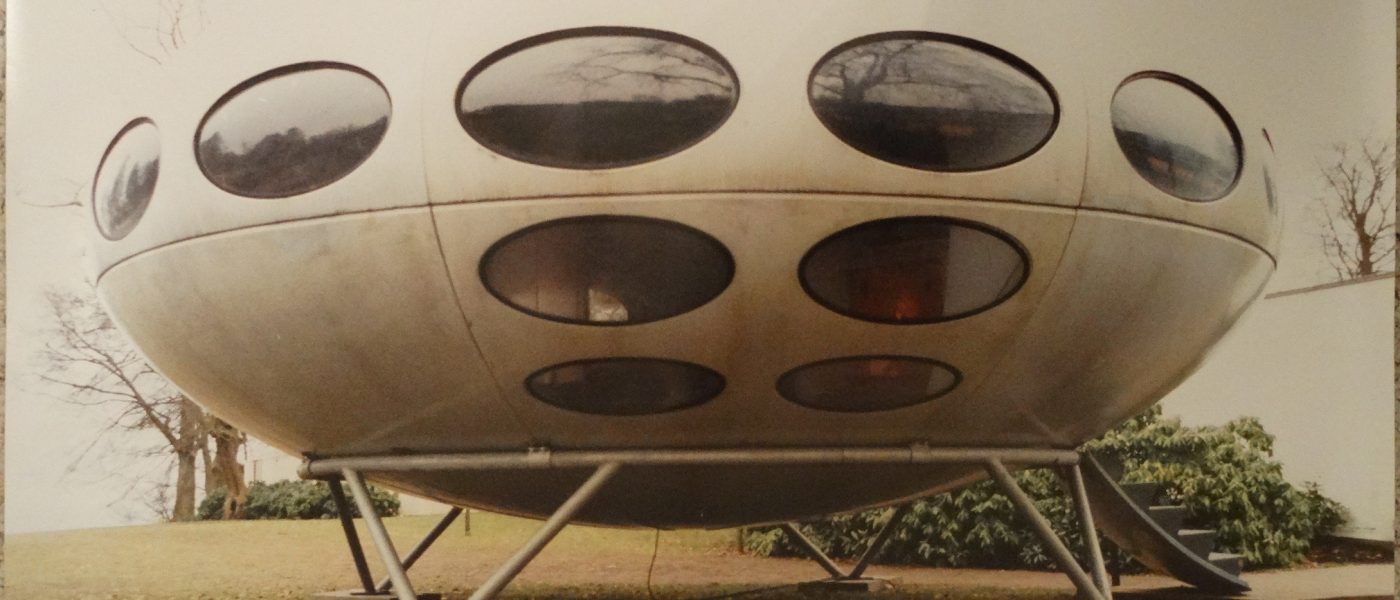
The photo below is of an original large format photo of Futuro #000 at the Louisiana Museum Of Modern Art in Humleæk, Denmark where it was displayed during the exhibition «Vision & Reality — Conceptions Of The 20th Century» which ran 092100-011401 that we recently added to our collection of «Things Futuro». The photo is approximately 30″ by 20″ and printed on heavy photographic paper. Coincidentally we recently came across this photo posted to Instagram by technicolor_totenkompf which shows a di
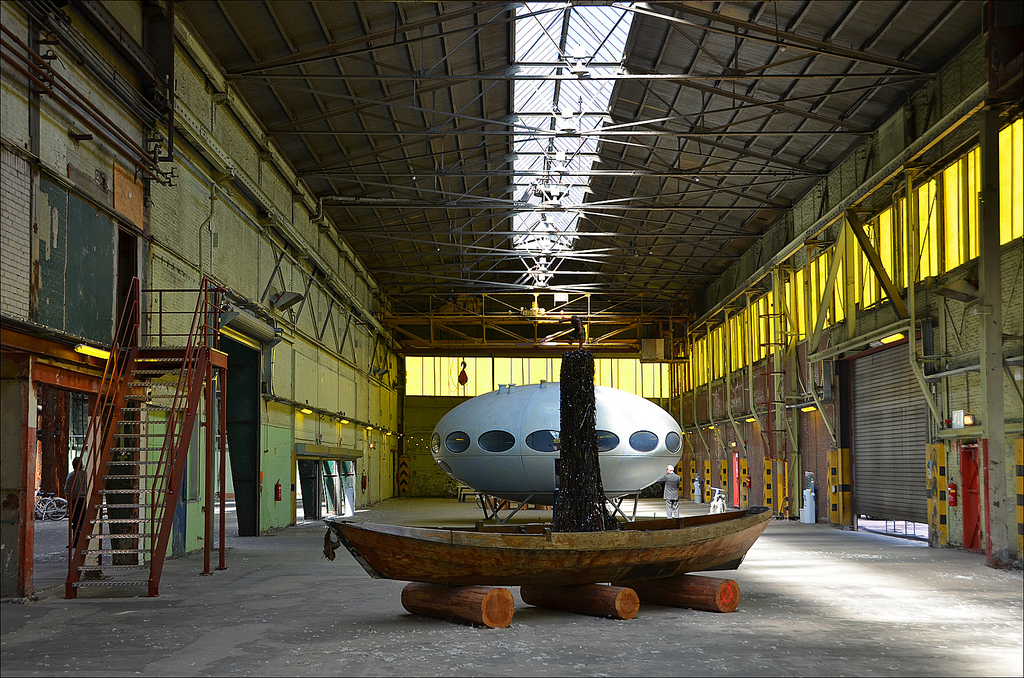
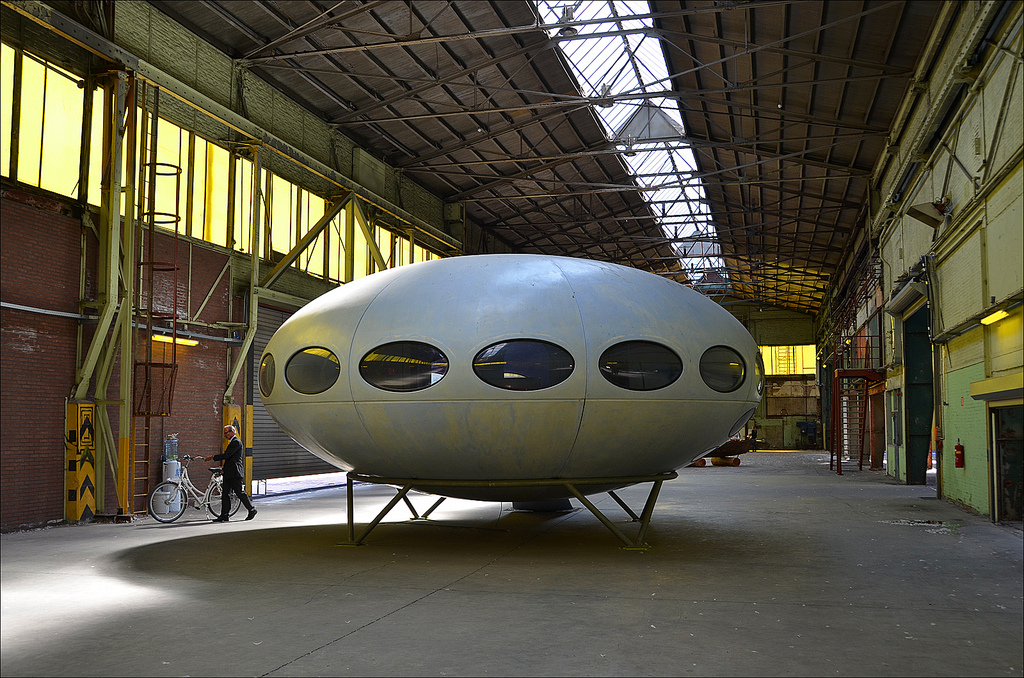
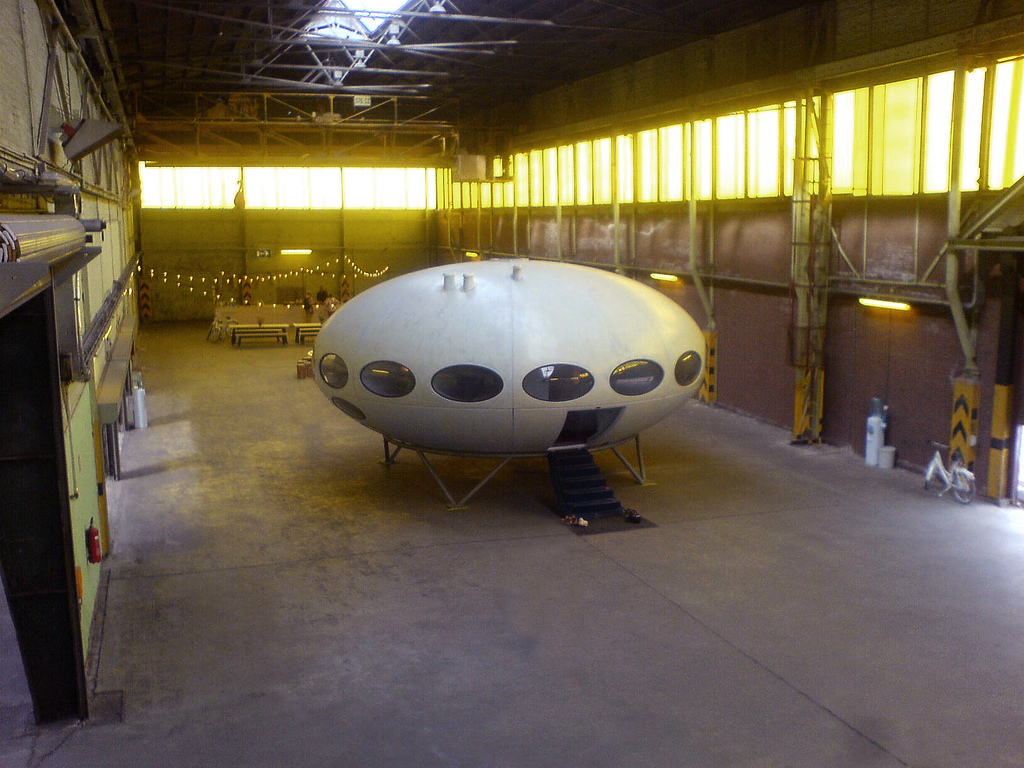
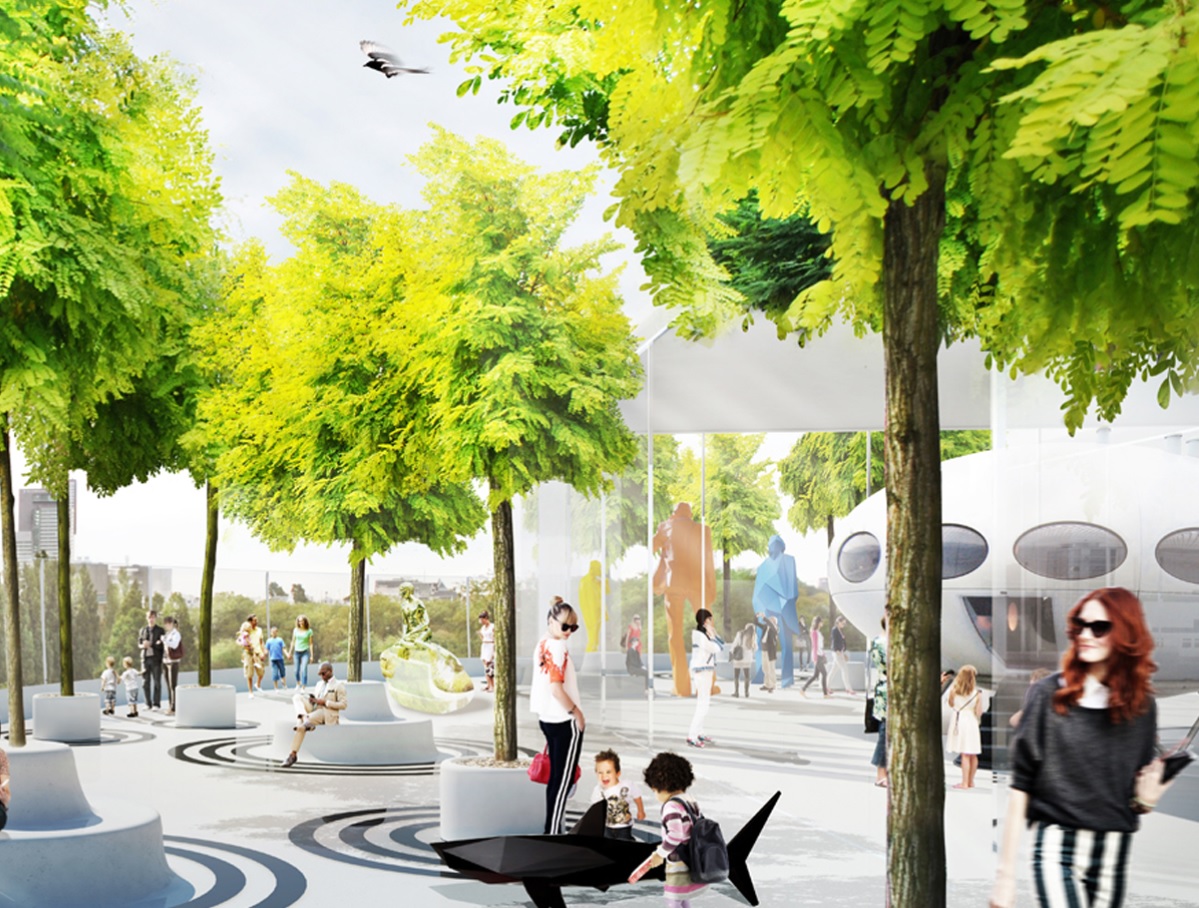
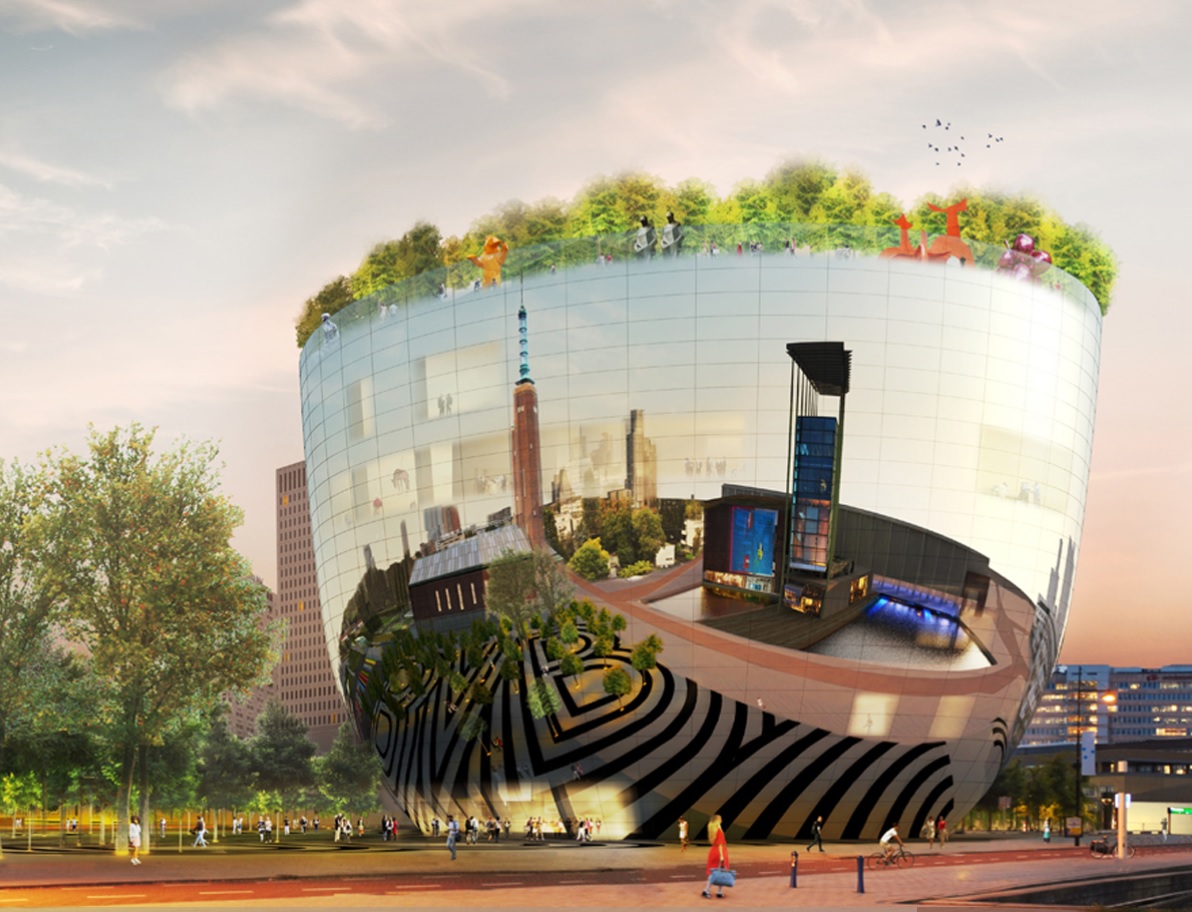
We came across this photo on Instagram recently. The photo was posted by virginiaz and among its hashtags was #mvrdv and #publicartdepot. Though not identified specifically as such based on the hashtags it appears to show a rather cool model/mock-up of this Futuros planned new home on the roof of the «Art Depot Boijmans Van Beuningen» which is currently under construction and planned to open in 2019.
Back in 2014 the very cool looking «Art Depot Boijmans Van Beuningen» was projected for completion sometime in 2017. According to a 032017 news article on the Chartered Institute Of Building Global Constrution Review website work has just recently begun on the project. Currently the building is projected to «top out» in 2018 and open to the public in 2019. This Futuro will have a new home on the roof of this building.
The two videos below from the website yle.fi have been around a long time but until recently we had not noticed that there was an option to embed them so we had not included them here assuming that would impinge on copyright. Having found an option to get embedding code it is clear that the videos can be shared and so we chose to add them here.
That said so far we have not been able to get the actual embed code from yle.fi to work so for now we have included archived copies of the footage which
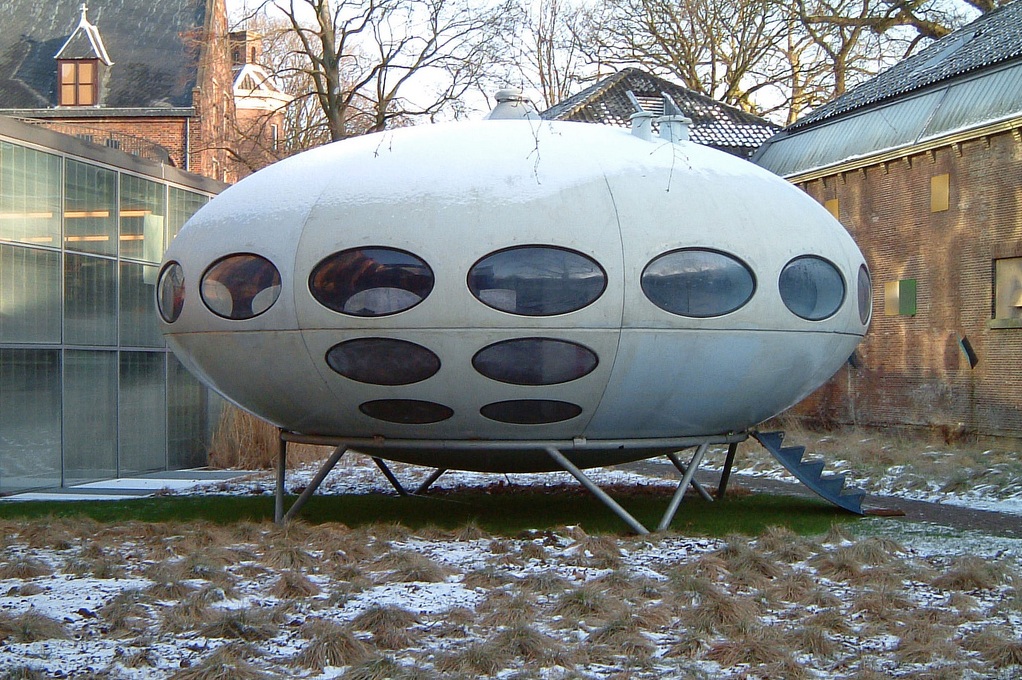
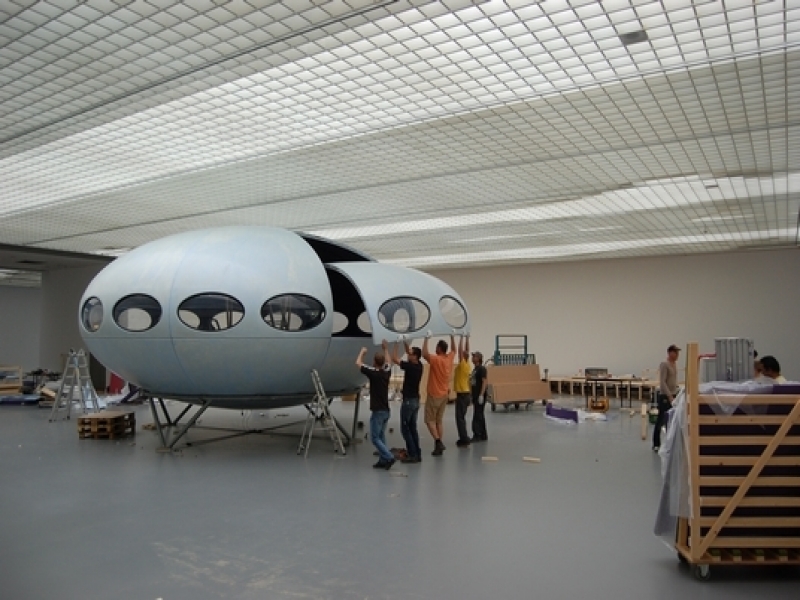
Although this Futuro was acquired by the Museum Boijmans Van Beuningen back in 2007 and restored starting in 2009 the museum recently (022416) posted the video below to Youtube. The video includes a little general Futuro historical information along with some great footage of the process of assembling a Futuro.
Despite the restoration taking place several years ago we do not recall seeing this footage previously (which of course does not mean it was not out there; regular readers of this site w
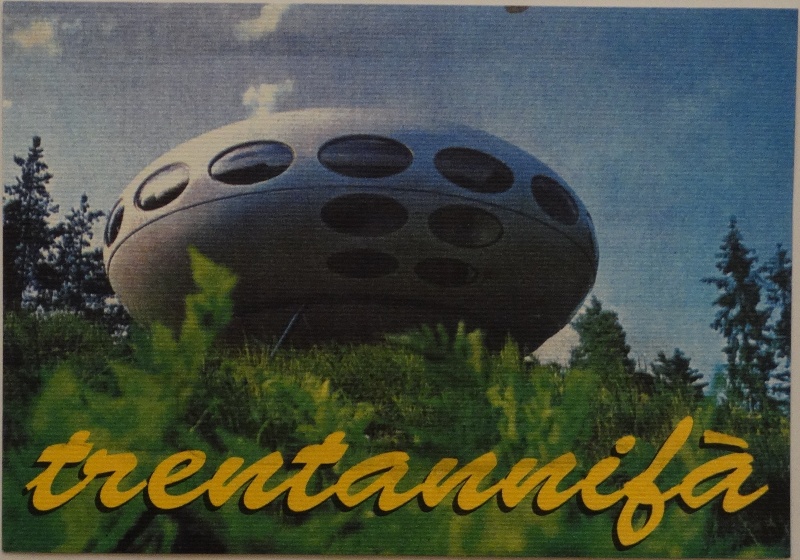
We recently added the postcard below to our collection of «Things Futuro». While the text on the back of the postcard does not identify the location of the Futuro based on other photographs we are of the opinion that it depicts this Futuro during its time in Turenki, Finland during the 1970’s.
As previously mentioned Futuro #000 was displayed 013198-042698 as a part of the «68 — Design & Popular Culture Between Consumerism & Conflict» exhibition at the Kunstmuseum Düsseldorf, Germany (Catalog).
This week Stephan Hacker was kind enough to send us the photos below which were taken at the exhibition. The quality is a little grainy (Stephan tells us he had only a very small camera in those days) but it is still very interesting to see photos from the exhibition. Our thanks to Stephan for
It seems this Futuro is destined to get a new home. Rotterdam based architecture and urban design practice MVRDV has been contracted by the Museum Boijmans Van Beuningen, the De Verre Bergen Foundation and the City of Rotterdam to construct the Collection Building which is described on the MVRDV website as being a:
«15.000m2 art depot with restoration facilities, exhibition spaces, offices, logistics, bar, restaurant, sculpture garden and private collectors facilities.»
Planned for completion
The video below is by «The Unknown Cameraman» — the footage appears to be a composite of footage from Vernissage TV showing this Futuro, the Greenwich Futuro and the Willingboro Futuro. The Museum Boijmans Van Beuningen footage starts at 01:30. At one point in the commentary the video indicates the footage has been taken at various points in New Jersey — clearly the Vermissage TV footage was not shot in New Jersey.
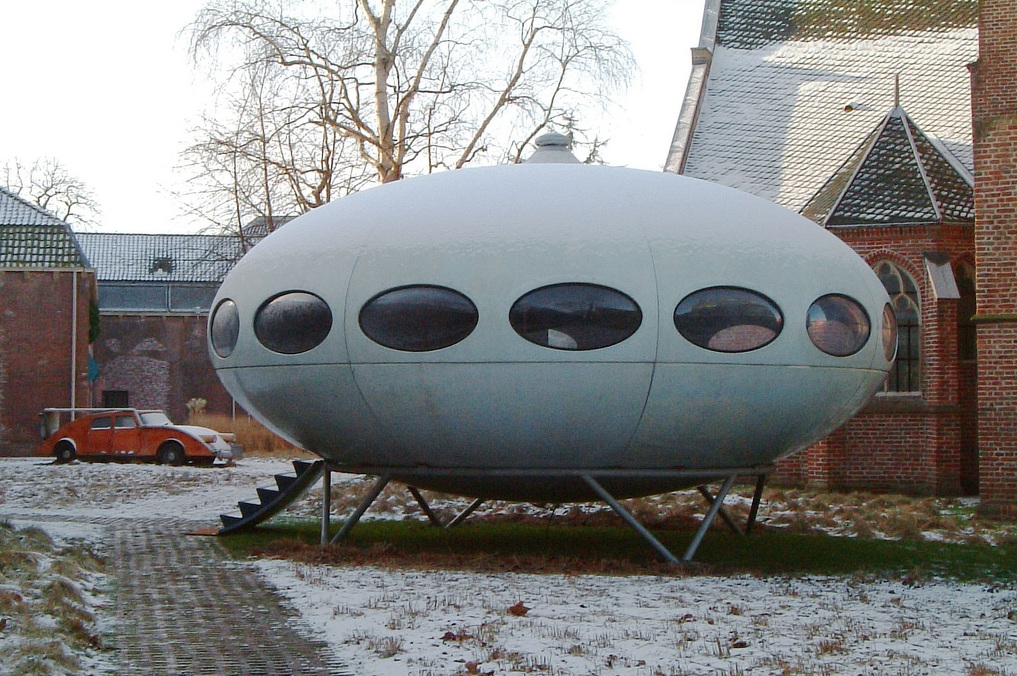
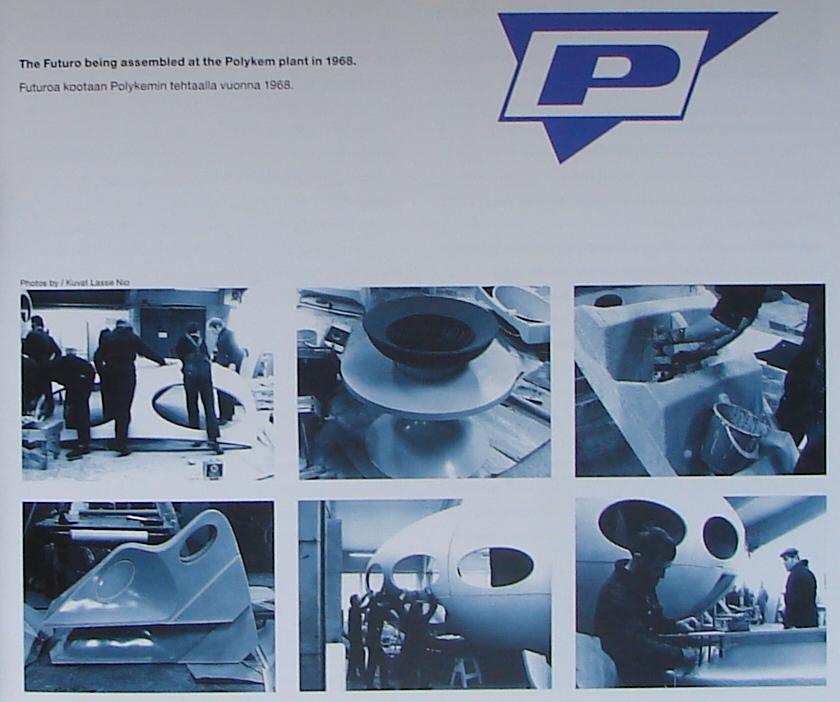
The first prototype Futuro, #000, was manufactured at the Polykem plant in 1968. The Futuro has spent time in several locations and has also been displayed at several exhibitions over the years. The history of the unit is documented in photos here. Please note that several of the images displayed below are low quality low res photos from our copy of «Futuro — Tomorrow’s House From Yesterday». Our intention is to illustrate the history of Futuro #000 and not to provide copyright infringing images
The long and intriguing history of the Futuro House all began with this Futuro, #000. In 1965 Dr. Jaakko Hiidenkari asked Matti Suuronen, with whom he attended school, to design a ski-cabin. Much of the early history of the Futuro is documented in detail in the book «Futuro — Tomorrow’s House From Yesterday» edited by Marko Home and Mika Taanila. In the book we learn that the ski cabin was to be:
«quick to heat and easy to construct in rough terrain.»
A construction contract was ultimately awa
Photo Gallery